
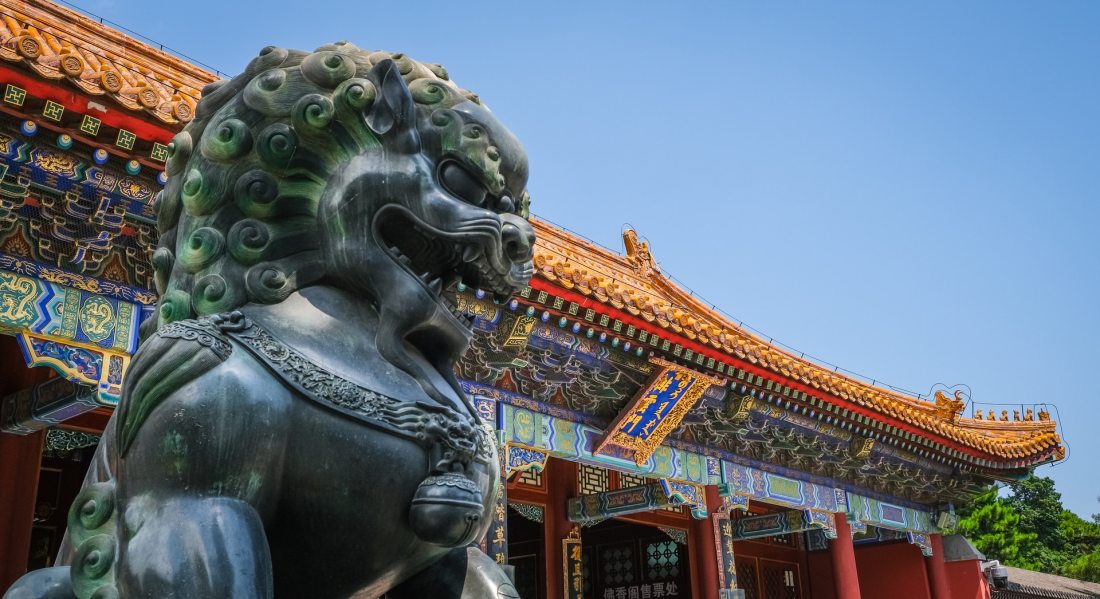
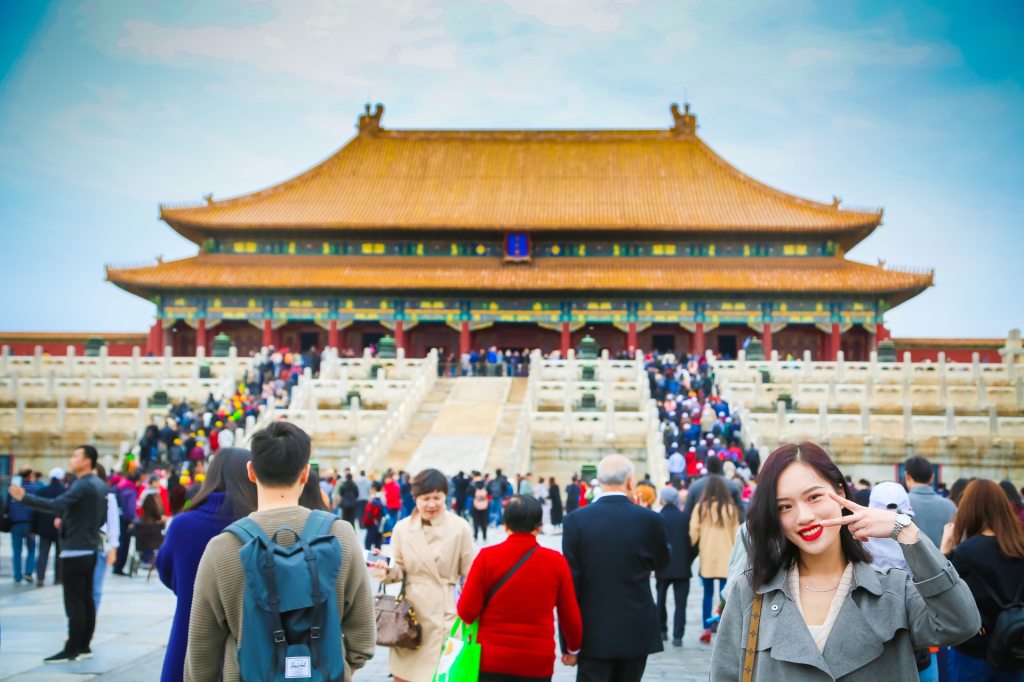
Remarkable historical monuments. Ancient wonders. Countryside villages. Chinese cuisine is part of Chinese culture. No matter what you decide where to visit there, china will surprise you, be spoiled for choice. Narrowing down what to see and experience can overwhelm for return visitors—much fewer first-timers. When you’re finally ready to take the plunge, here are ten things to know before you go.
1. You’ll travel back in time
Chinese technology and its economy continue to surpass western advancements, but if you’re a first-time visitor, the state of China’s cities and villages might surprise you. Sure, there are impressive, contemporary marvels like Beijing’s National Grand Theater and Shanghai’s Oriental Pearl TV Tower, but then there are those 1980s high-rise residential blocks, old Chinese markets lost to time, and countryside villages whose pace of life and daily customs follow rules made generations ago. Prepare to move slower and observe the way locals interact to witness how the old-world exists in the modern-day.

2. It’s more than Beijing and Shanghai
With so much to see, it’s easy to settle on an itinerary that hits all the major highlights—the pandas in Chengdu, the skyline of Shanghai, the Great Wall outside of Beijing—but you’re missing out if your trip ends there. A little sneak peeks into authentic Chinese culture, cuisine, and history, set aside time for the unexpected and explore smaller villages and provinces outside the major metropolises. Places like Guilin and Guizhou are renowned for their natural beauty, while Guangdong and Yalong Bay National Resort, is located about 25 km southeast of Sanya City, Hainan Province have port-town appeal.
3. The nature in the south is otherworldly
We’re all familiar with northern China’s famous bamboo forests, home to the panda, but the country’s southern landscapes are an underrated highlight. Whether you’re looking for adrenaline-pumping action or observe history and topography in a more quiet state, southern China offers both. Explore the ancient caves in Guilin, a cruise down the Li River to marvel at the Karst Mountains, hike and rock climb in Yangzhou, meander the Longsheng Rice Terraces (Dragon’s Backbone) also called the Longji Rice Terraces, or Luofu Mountain waterfalls in Huizhou. It’s less about the history here, and more about the natural beauty of China.

4. A visit to minority villages is a must
Nine percent of China’s total population comprises 55 ethnic minorities who often found living in remote areas and living according to their familiar ancient traditions passed down to generations. You’ll find this way of life in the Basha Miao old Ethnic Village, referred to as the last gunman group, who, instead of village barbers, use knives to shave men heads. You’ll also see it in the daily life of the Zhaoxing Dong people, whose culture revolves around the song. Only in the past decade have some.
minorities opened their villages to tourists hoping to experience their traditions and interact outside world; it’s the way for the villages to make additional money besides farming, which goes towards preserving their villages.

5. Non-stop flights from the U.S. to China
While China Eastern and Air China are popular search results when booking a flight to Asia, Hainan Airlines—mainland China’s only five-star rated airline by Skytrax—offers direct, non-stop, and often affordable routes to Beijing and Xi’an from U.S. cities including Boston, Seattle, San Jose, L.A., and Chicago. (A round-trip ticket from Boston Logan, for example, has run as cheap as $500 compared to $1,000 with Air China, which also includes a layover.) As a partner airline of the Fortune Wings Club, frequent flyers can also take extra comfort in knowing the thousands of miles accumulated on the journey will apply to their account.

6. The cuisine differs from region to region
As with many countries, Chinese food is not just its stereotypical western dishes (General Tsao; dim sum) found on our menus. The Chinese categorize these popular meals as Cantonese cuisine, popular to the southeastern province of Guangdong—one of the country’s eight regional cuisines. The other seven include Zhejiang and Jiangsu cuisines, whose sweet and light flavors echo those found in Guangdong cuisine; Sichuan and Hunan cuisine, both laden with red chili spice; Hui and Fujianese cuisine, which feature unique delicacies Eight Culinary Traditions of Chinese cuisines from the sea and mountains; and Shandong cuisine, which focuses on fresh seafood.
Planning a foodie adventure? Expect to find your dumplings and noodles in the north (where the country’s wheat is grown) and rice in the south. JS Tip: Keep a lookout for rice wine, which is produced when rice production is plentiful and farmers can ferment the leftovers.

7. Download and install a VPN before the board on your flight
The Chinese government restricts access to Instagram, Facebook, Twitter, and even Google, so if these apps are part of your daily life, it’s time to download a VPN—and do it in advance. Depending on the length of your trip, you may get a free trial with OneVPN. If you plan on staying longer than the 7days trial period, know that VPN services start at $7.95 per month to $48 per year (depending on your preferred payment package). Just be sure to install and download and test the VPN on every device you plan on using to access these blocked applications while traveling.

8. China experiences four seasons, so pack and prepare for it
China is Huge – China occupies 9.6 million square kilometers (3.7 million square miles) —so depending on when and where you visit, you may have to pack for both warm and cold weather. Mostly, it aligns China with the rest of the northern hemisphere’s four seasons, its northern region being much cooler than the south. As always, pack for your journey: travelers heading to the Forbidden City and the uneven grounds on the Great Wall should pack a comfortable pair of walking shoes, and a raincoat would be must take the item for what could be a Misty Li River cruise in Guilin or A rainy day in Yangshuo visiting pandas. When visiting temples, it’s always polite to wear a scarf or shawl that covers your shoulders.

9. WeChat pay is used by everyone for everything in china
If you want to adapt to local customs (or just to make it easier on yourself), download WeChat. Contrary to what much might think, this is not China’s form of WhatsApp (a free way to communicate between international users). Instead, it’s a bit of everything: texting, social media, and payment. You can even buy tickets to popular destinations through the app and use it to skip long lines on bus stops. Download and pre-load it with some money in advance for convenience.

10. The language barrier can be a challenge
Because English is taught in primary schools, most of China’s youth will understand you, but the same can’t be said for older generations. It may be worth hiring a tour guide, who will come in handy when you’re trying to buy tickets for attractions or transportation, making your way through crowds, and any language exchange you run into. (If you don’t do groups, hiring a private or semi-private guide are suitable, cost-effective options.) If you’d prefer to peruse the sights on your own, make sure you have a translator app that can scan text or interpret audio. If that translator app happens to be Google Translate, we’ll say it again: make sure a VPN is downloaded beforehand!
 VPN Security